Keyword research is the backbone of SEO, and Semrush makes it easier to uncover valuable opportunities. This post walks you through a practical process, from finding current rankings to identifying new keywords and organizing them into content-ready clusters. This is a brief outline of a simple keyword research process I came up while learning how to use SEMRush.
Contents
- Keyword research process, using SEMRush
- Given a Website with some activity
- Website with little activity
- Educated Guess
- Summary
- FAQ
Keyword research process, using SEMRush
For a given website
- Analyze keywords for the domain given.
- Order by KD (keyword difficulty) and then by volume.
- Depending on the objective the keywords that are of interests will be different. But in general, let’s focus on those keywords in the “chunky middle”, long tailed keywords that have a reasonable volume and whose keyword difficulty isn’t so great that it will be hard to rank for.
- Make a list or download these
- For the top 5, check the related keywords and questions.
- Find those in the chunky middle or that look interesting now.
- Make a list or download those.
Site has no or few keywords it is ranking for
If the site doesn’t have any or many keywords it is ranking for then check their competitors.
- Analyze the domain of a given competitor.
- From here check to see who are the top 5 competitors of this first competitor.
- Check for the common keywords among the given domain and each of the top 5 competitors.
- Find those in the chunky middle or that look interesting.
- Make a list and download for each competitor.
Educated guess strategy
If you have an “idea” or “guess” as to what keywords you think may be searched by people who may be interested in the service/product your business is providing then use the keyword magic tool to bulk search these keywords.
- You can bulk search up to 100 keywords.
- This gives a true sense of whether it’s the best keyword to use or not.
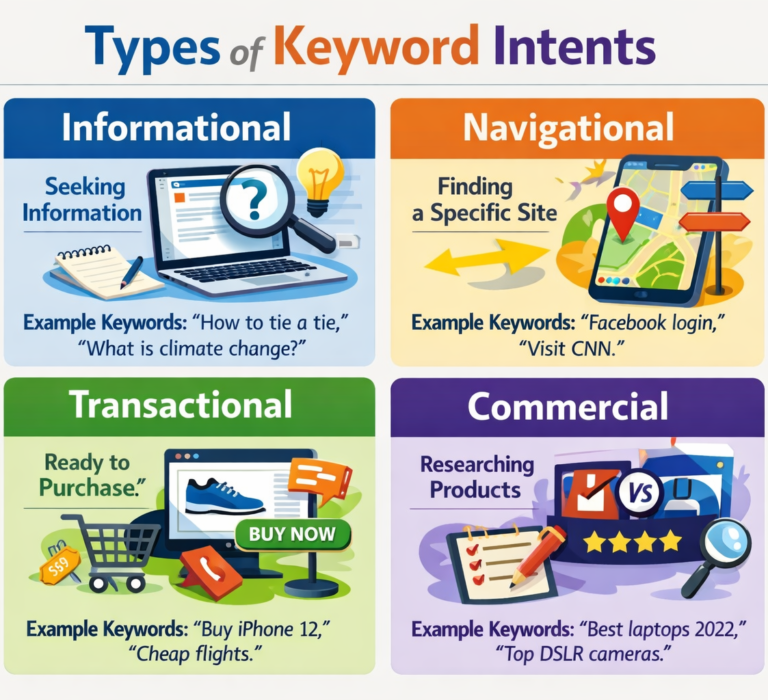
- There may be a related keyword with more volume or a more desirable intent to use.
Hopefully something there is something above that is helpful in getting started with keyword research using SEMRush. If you still need some ideas or suggestions, reach out and I’ll see how I can help! 😊
Summary
Using Semrush for keyword research helps you find the right terms, assess competition, and build a focused content strategy. With ongoing tracking and analysis, you can continuously improve your site’s visibility and SEO performance.
FAQ
Absolutely. Semrush’s interface includes user-friendly tools like Keyword Magic and Keyword Overview. You can start with basic seed and long-tail terms and gradually scale into deeper analysis as you get comfortable with search volume, difficulty scores, and intent.
Keyword Magic helps you discover new keyword ideas based on seed terms and filters like intent or difficulty. Keyword Gap, on the other hand, compares your domain with competitors to reveal missing or underperforming keywords you should target.
That depends on your site’s authority. If you have an established domain, go after competitive, high-volume keywords. For newer or smaller sites, focus on long-tail, low-difficulty terms you can realistically rank for—building momentum and relevance over time.
Grouping related keywords into clusters helps ensure you’re covering topics comprehensively. It also prevents keyword cannibalization, where multiple pages compete for the same term—while improving site structure and topical authority.
Use Semrush’s Position Tracking to monitor your rankings, visibility trends, and SERP features like featured snippets. Combine this with traffic, engagement, and conversion data from Google Analytics to see how your keyword-focused content performs over time.