Gathering data by hand can be slow, error-prone, and overwhelming. That’s where automatic data collection comes in. Automatic data collection is a technology-driven way to capture information across systems in real time, with minimal human involvement. In today’s world, automation isn’t a nice add-on, it’s often essential for clean, fast, and scalable data workflows.
Contents
- Questions about automatic data collection
- What is automatic data collection?
- Why automatic data collection?
- Summary
- FAQ
- References
Before going into “why data collection?” perhaps we should first answer “What?” What exactly is automatic data collection? This begs the following questions:
Questions about automatic data collection
- Who would want automatic data collection?
- How would automatic data collection take place?
- When would automatic data collection occur?
Each of the questions is a post in it’s own right, so we’ll just focus on briefly describing what automatic data collection is and then go into why it would of value.
What is automatic data collection?
There is a term called Automatic Identification and Data Capture (AIDC). This refers to the process of automatically identifying objects, collecting data about them, and storing that data in a system such as a database or table.
If we narrow our focus to information collection from the internet, this process is often referred to as web scraping. Essentially, it means extracting useful information from websites.
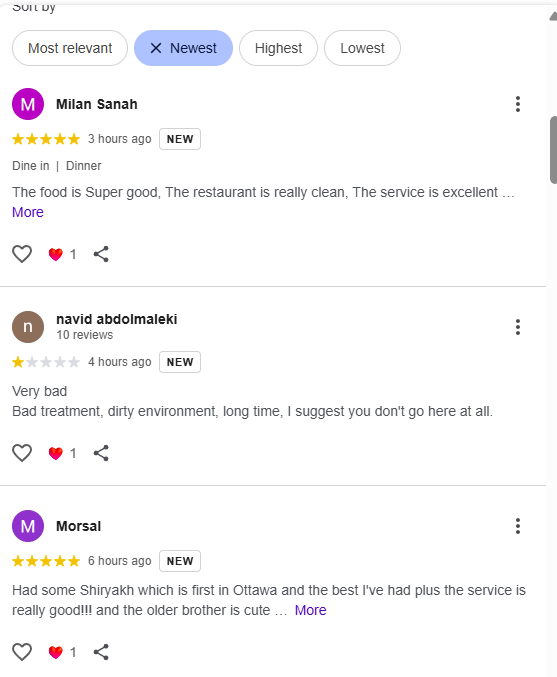
For example, imagine you own a small shop with an e-commerce site. Your customers leave comments and reviews when they buy products online. These comments can include feedback on service, product ratings, and more.
You want to understand how customers are rating your products so that you can get some information on what you might offer next year. While sales data is helpful, it doesn’t always tell the full story. A product may sell well but receive poor ratings.
Rather than manually reading and tallying all the reviews and star ratings, automatic data collection can help. You could create a small program to scrape this information from your own website and store it in a file. You can then explore the data later.
Another scenario: You want to find out what customers want to buy. Traditional surveys, like forms or phone interviews, aren’t as effective anymore. People don’t have time for them.
However, many people do spend time on social media. Maybe there’s a popular Twitter account where users constantly tweet about handbags, discussing their favorite ones, their least favorite bags, and the top designers.
This Twitter feed could be a goldmine of insight. But reading and collecting tweets manually isn’t practical. Again, you can build a small scraper to collect tweets from that feed and store them in a database or table.
In both cases, you’re collecting data that would be impractical to gather manually, using automatic methods to store it for later analysis.
Why automatic data collection?
The above few examples of what is automatic data collection also provided some indication of “Why automatic data collection?” as well. There are so many more reasons why data collection may be required. First off, data is everywhere, so might as well start using it and in order to use it, we need to collect it.
Reasons for automatic data collection
- financial resource may be scarce
- time is becoming more scarce for everyone making it hard to collect data by hand
- society is becoming a very “now” society meaning that up to date information is necessary
- everything is very process oriented from beginning, data collection, to the end, publication requiring a way to reproduce this process efficiently
Reasons against old school data collection
- tiring collecting research data in a non reproducible manner
- that is cumbersome and
- prone to errors increasing the risk of death by boredom. For humans, this third reason is a large cause of errors.
Pros for automatic data collection
- more reliable
- can be reproduced
- and is time-efficient as no micromanaging, breaks etc are required
Business, researcher, family, individual, we all have data around us in our lives. In some cases it’s more clear that this data can be useful in providing insight into what is going on in a particular situation or environment as in a business setting or for a research project. In these cases gathering the data is required before even going ahead and getting it to work for us. Time, resources and finances may not be available to gather this data by hand so investing in some sort of automated means of gathering this data whether for a one time project or situation or continuously may be the answer. Once the data has been gathered, now what? To be continued!
Summary
Automating data collection means working smarter, not harder. It will speed up data capture times, reduce errors, and lets your focus on insights instead of manual busywork. While there’s an upfront cost and some technical setup required, the efficiency, accuracy, and competitive edge gained are well worth it. With the right tools, you can turn raw information into reliable insights, faster, cheaper, and consistently!
FAQ
It’s a system or process that gathers data from sources like websites, APIs, IoT devices, or forms without human entry—often using tools like web scrapers, APIs, or smart data capture. It enables real-time, accurate data retrieval for analysis
You get much faster data capture, reduced human error, scalable collection across large datasets, and long-term cost savings. Automated pipelines also maintain consistency and free up time for analysis and strategic work.
Yes. You might face technical complexity, higher initial setup costs, or potential data quality issues if pipelines aren’t monitored. And depending on the source, there could be legal or compliance concerns—like scraping data without authorization.
Popular methods include web scraping for gathering web data, API integration for structured feeds, and smart data capture technologies like OCR or barcode scanning. The choice depends on your data sources, format, and use case.
Smaller operations can benefit too—especially if they need to handle repetitive tasks like inventory tracking or social media monitoring. While the setup may require some technical setup or tools, the efficiency and accuracy gains can be substantial—and more accessible than many assume.
References
- Automatic identification and data capture, Wikipedia, URL: https://mail.yahoo.com/?.intl=ca&.lang=en-CA&.partner=none&.src=fp#
- Automated Data collection (ADC) Basics, Piasecki, D., URL: http://www.inventoryops.com/ADC.htm
- Munzert, Simon; Rubba, Christian; MeiBner, Peter; Nyhuis, Cominic; [2015], Automated Data Collection with R, A Practical Guide to Web Scraping and Text Mining; John Wiley & Sons, Ltd